Tuesday, January 20, 2026

Penn Calls Government’s Demand for Lists of Jewish Staff ‘Disconcerting’ [ NYTimes ]

The flava:
The University of Pennsylvania on Tuesday condemned Trump administration investigators for seeking records about Jewish employees, saying in a federal court filing that the request was “disconcerting.”

The university and the Equal Employment Opportunity Commission have been at odds for months over an investigation into antisemitism at Penn.

The tensions roared into public view in November, when the Trump administration sued the university because it had “refused to comply” with a subpoena that sought information about employees who brought complaints about antisemitic discrimination and those who are members of Jewish groups on campus, among other people.

The demand prompted a campus uproar, and in a blistering response on Tuesday, Penn described the request as an “extraordinary and unconstitutional demand.”

“The E.E.O.C. insists that Penn produce this information without the consent — and indeed, over the objections — of the employees impacted while entirely disregarding the frightening and well-documented history of governmental entities that undertook efforts to identify and assemble information regarding persons of Jewish ancestry,” the university said in a filing in Federal District Court in Philadelphia. “The government’s demand implicates Penn’s substantial interest in protecting its employees’ privacy, safety and First Amendment rights.”

Penn declined to comment beyond its 163-page filing on Tuesday. In its filing, the university said that the E.E.O.C.’s request had “alarmed” members of the university’s Jewish community.

The article:

Friday, January 9, 2026

In Scientific Publishing, Who Should Foot the Bill? [ Undark ]

The flava:
From 2019 to 2023, authors paid an estimated $8.3 billion for open access to six publishers. And critics, including Kharrazi, contend the article processing charge (APC) model creates incentives that are at odds with high-quality science: Since volume equals profit, the model favors quantity over quality. A recent Cambridge University Press report on the issue quoted one librarian: “[T]he journal’s interest in rejecting bad science is in direct conflict with its interest in maintaining revenue.”

The APC at Current Research in Environmental Sustainability, one of some 2,900 titles published by Elsevier, is $2,620. At the journal, Kharrazi had a front row view of the APC model’s effects, and he did not like what he saw. So long as a reviewer signed off, he told Undark, whatever it was — credible research, junk science, AI-generated text — the financial incentives were to publish. . . .  

The article:

Tuesday, January 6, 2026

Charles Schultz on libraries


Another note from Southern Bubba, Ph.D.

What is love?

Really.  I have heard colleagues say that they love their jobs.  Then I wonder whether they would work for free.  After all, no one demands to be paid for doing what they actually love.  

But I think what my colleagues really mean is that they think they would rather endure their current misery--rather than some other unknown misery--for the paychecks they receive.  

We're in the business of measuring and sorting people (most especially their central nervous systems).  Does he have the IQ?  Does she have the temperament?  Can they function in the field?  Can their disability be accommodated?  Relative to others in her boat, can she swim?  Will he fulfill his promise one day?  Could she be the best?  Will she embarrass us one day?  Will they harm someone because I opened the gate for them?

We have to be shrewd, because we, too, are being judged on how well we judge.

But I'm not sure whether I care anymore about being judged.

To win.  To perform.  To dominate.  To create.  To impress.  To be ethically or technically superior.

I'm kind of tired of it.

Friday, December 19, 2025

The best science images of 2025 [ Nature.com ]

https://www.nature.com/immersive/d41586-025-03935-3/index.html

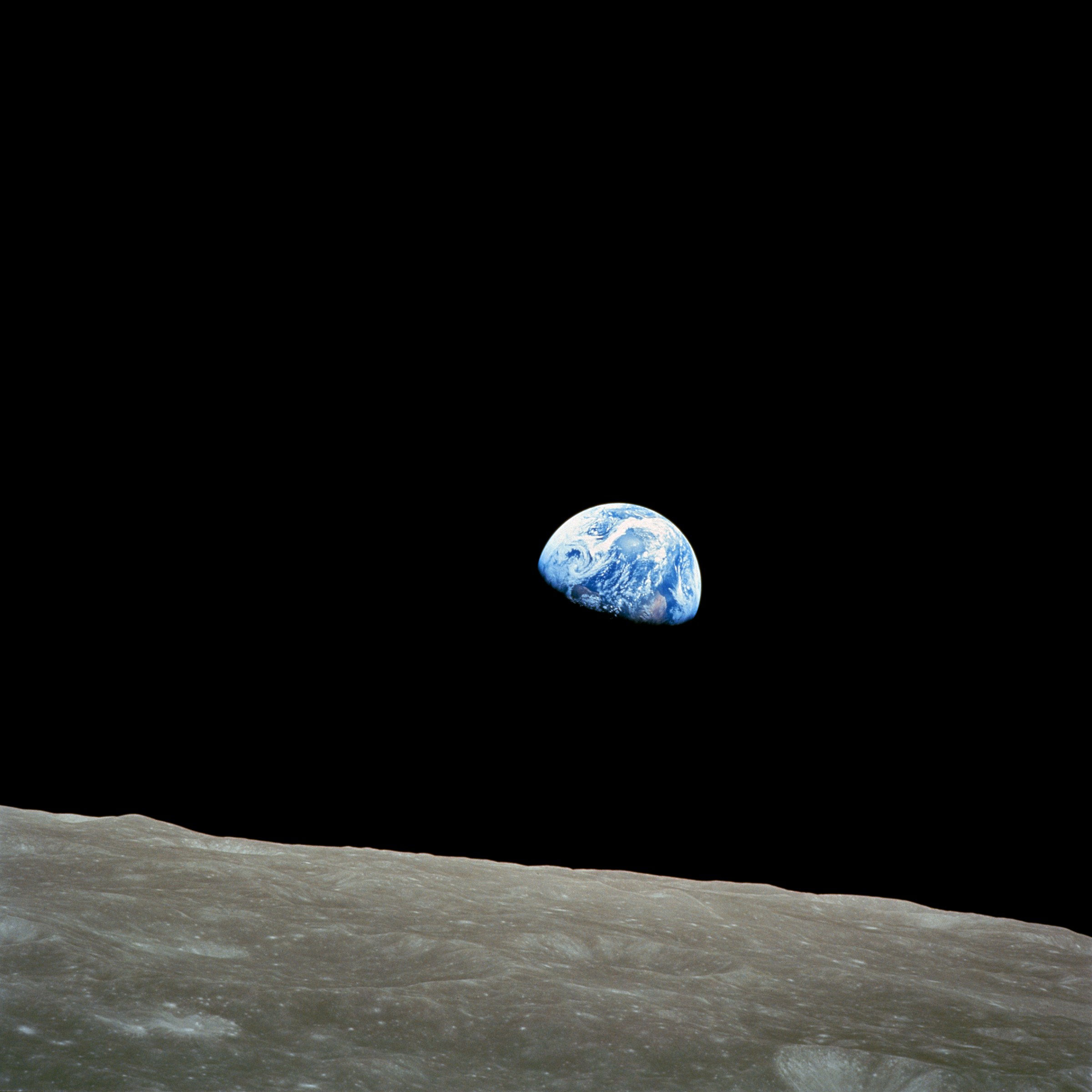
(Not 1968.  But still.)


The Dangers of Data on Teaching in Higher Education [ DailyNous.com ]

The flava:

“The dirtiest secret in higher education is that there is no good data on the quality of teaching and teachers on college campuses.”

So begins an interesting essay, “Teaching Quality,” by Hollis Robbins at her newsletter, Anecdotal Value.

Robbins laments the lack of data on instructional quality in higher education. Widely used student evaluations of teaching aren’t helpful, she says, owing to them “being designed to measure [student] satisfaction, not [teacher] quality.” Furthermore, their results are largely unavailable to those outside of the institutions in which they’re administered. What Robbins is looking for is data from which those inside and outside institutions can come to know how good the teachers are at them.

In the absence of such data, she estimates, based on her observations over 30 years in academia as a professor and dean, “that except for very elite private institutions… well over half of university instruction across the US is fair to poor. Perhaps 25% is good and 5% is excellent.” Your own estimates may vary. . . .  

The article: